A new signal-detection analysis indexed by Europe PMC reports that all five glucagon-like peptide-1 receptor agonists it examined met conventional signal criteria for impaired gastric emptying in the FDA Adverse Event Reporting System. The authors state the analysis is descriptive and hypothesis-generating and makes no claim about clinical risk.
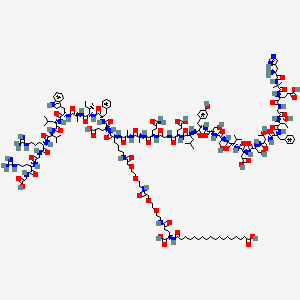
The substances involved include semaglutide (sold as Ozempic and Wegovy) and tirzepatide (Mounjaro and Zepbound), alongside dulaglutide, liraglutide and exenatide. The authors note that GLP-1 receptor agonists delay gastric emptying as an on-target effect, meaning the slowing is an expected consequence of how the drugs work rather than an unexplained one.
What the analysis did
The researchers used the public openFDA interface to FAERS to identify reports for the five substances through the generic-name field. The outcome measured was the MedDRA Preferred Term "Impaired gastric emptying" (code 10021518).
For each substance the team calculated the proportional reporting ratio, the reporting odds ratio with 95 percent confidence intervals, and the Yates-corrected chi-square. Counts reflect the full database snapshot at the extraction date, and the authors say all figures are reproducible from the public openFDA source using their analysis script.
Key results
Semaglutide showed the strongest disproportionality, with a proportional reporting ratio of 88.7 (95 percent CI 85.1 to 92.4), based on 3,052 impaired-gastric-emptying reports out of 82,911 total reports. Dulaglutide followed at 37.7 (1,593 of 86,770), then liraglutide at 20.9 (563 of 50,219) and tirzepatide at 20.2 (1,409 of 140,435).
Exenatide showed the weakest signal of the five, at 4.7 (136 of 52,308). The authors say these results reproduce, with a transparent method, the substance-level signal previously described by independent groups analyzing the same database.
Limitations
The authors are explicit that disproportionality quantifies reporting, not incidence or risk, and cannot establish causality. FAERS is a spontaneous reporting database, so the counts reflect what was reported rather than what occurred in any defined patient population.
The work is a signal-detection exercise rather than a clinical study, and the authors say it is hypothesis-generating. They state the analysis was carried out without asserting causation.
What it means
The authors present the work as a reproducibility check on earlier independent FAERS analyses, confirming that the reporting pattern holds at the active-substance level. What the signal implies about actual clinical risk is not something the analysis was designed to answer.
Comments (0)